
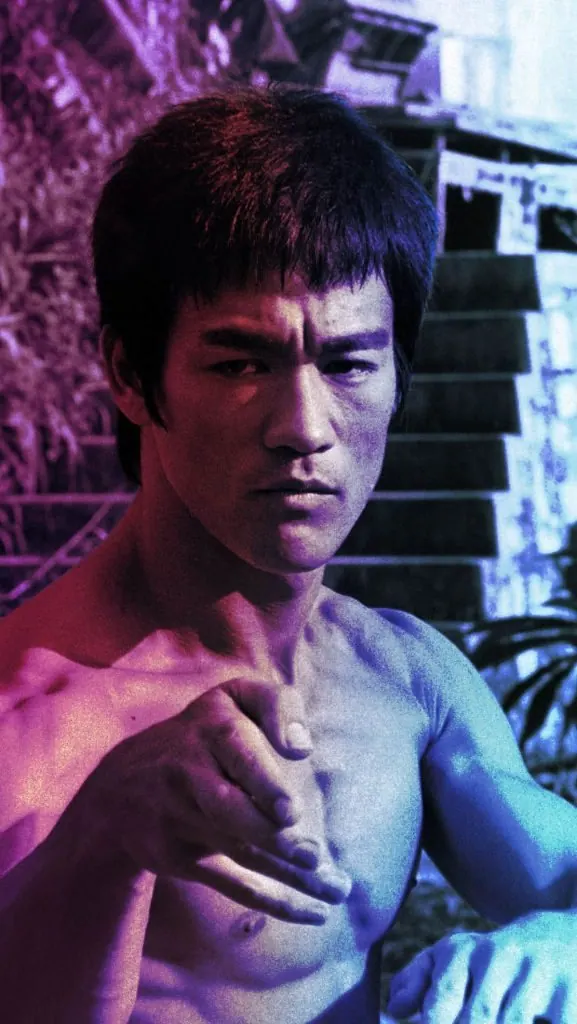
Jeet Kune Do is the martial art Bruce Lee founded and named in 1967. The name means "the way of the intercepting fist". Rather than a fixed style, it is a set of principles: intercept attacks, move with economy and directness, train across kicking, punching, trapping and grappling ranges, and keep only what works.
Jeet Kune Do (JKD) is the martial art Bruce Lee founded and named in 1967. It is built less around a fixed set of techniques than around a way of fighting: intercept the opponent's attack, use the most direct and economical movement available, and adapt to whatever is in front of you. This guide explains what the name means, the principles behind it, what training looks like today and how to find authentic instruction in Australia.
What does Jeet Kune Do mean?
Jeet Kune Do means "the way of the intercepting fist". In Cantonese, jeet means to intercept or stop, kune means fist, and do means the way. The name describes the art's central idea: rather than blocking an attack and then replying, you meet the attack, or the intention behind it, with a strike or kick that stops it on the way in.
The concept owes a lot to fencing's stop-hit, where you land on an opponent at the moment they commit. In JKD it applies to everything: a stop kick to the shin as someone steps in, a straight lead that beats a wide punch, or simply moving so the attack never arrives.
Who founded Jeet Kune Do, and when?
Bruce Lee (1940–1973) founded Jeet Kune Do and gave it its name in July 1967. He had trained in Wing Chun in Hong Kong under Yip Man, then taught his own method, Jun Fan Gung Fu, in the United States. Through the 1960s he studied Western boxing, fencing and many other arts, keeping what held up against a resisting partner and discarding what did not.
Lee did not leave a finished syllabus. His notes were published after his death as Tao of Jeet Kune Do (1975), and the art itself was carried on by the students he taught personally. Two of them, Sifu Jerry Poteet and Sigung Richard Bustillo, trained and certified Sigung Ricardo Vargas, head instructor of Jeet Kune Do Legacy Academy in Melbourne.
What are the core principles of Jeet Kune Do?
JKD rests on a handful of principles that shape every technique you learn:
- Interception. Meet the attack early, with timing and distance, instead of absorbing it and countering late.
- Economy of motion. Take the shortest path to the target with no wind-up. A straight lead travels from where your hand already is, which makes it hard to see coming.
- Simplicity and directness. If one movement does the job, don't use three. Complexity is only worth adding when the simple option is closed.
- Absorb what is useful. Lee's best-known advice: "Absorb what is useful, discard what is useless, add what is specifically your own." Training is constant testing, not loyalty to tradition.
- Non-classical, no fixed patterns. Fights aren't choreographed, so JKD trains against live, changing movement rather than memorised sequences or forms.
- Strong side forward. Your lead hand and lead leg, usually your more coordinated side, do most of the work, putting the fastest tools closest to the target.
What are the five ways of attack?
JKD organises offence into five ways of attack. You don't need to know them before your first class, but they show how the art thinks:
- Single direct attack: one direct strike or kick with no preparation, such as a straight lead or a low lead-leg kick.
- Attack by combination: a natural series of strikes, often switching between high and low lines.
- Progressive indirect attack: a feint that draws a reaction, followed by a strike into the opening it creates.
- Hand immobilisation attack: trapping, where you pin or control an opponent's arm to clear a path for your strike.
- Attack by drawing: deliberately offering an opening to lure an attack you are ready to intercept.
What are the ranges in JKD?
JKD trains four ranges: kicking, punching, trapping and grappling. Real confrontations rarely stay at one distance, so the aim is to recognise which range you are in and move between them comfortably, rather than being an expert at one distance and lost at the others.
Jeet Kune Do at a glance
| Aspect | Jeet Kune Do |
|---|---|
| Meaning | "The way of the intercepting fist" (Cantonese) |
| Founder | Bruce Lee (1940–1973) |
| Named | July 1967 |
| Roots | Jun Fan Gung Fu (Lee's Wing Chun-based method), Western boxing, fencing |
| Central idea | Intercept the attack or the intention behind it |
| Key principles | Economy of motion, simplicity, directness, adaptability |
| Stance | Strong side forward, mobile, balanced |
| Signature tools | Straight lead punch, stop kick, footwork, trapping |
| Ranges | Kicking, punching, trapping, grappling |
| Forms (kata) | Not central; training is live and partner-based |
| Competition sport? | No; it is a self-defence and personal development art |
Is Jeet Kune Do a style?
Not in the classical sense. JKD is a framework of principles with a clear technical core, not a fixed catalogue of techniques and forms. Lee himself was wary of the name hardening into one more rigid system.
That said, "no style" does not mean "anything goes". A common misconception is that JKD simply means mixing bits of every art. The art Lee taught has a recognisable foundation: the on-guard position, footwork, the straight lead, the stop kick, trapping and energy drills. Adaptability is built on top of that base, not instead of it.
You can only judge what is useful once you have a solid foundation to test it against. In authentic JKD, freedom is the result of disciplined training, not a shortcut around it.
After Lee's death his students took different paths. Some focused on preserving what he taught, others extended it with other arts. If you are comparing schools, it is fair to ask which approach they follow. If you are weighing JKD against its closest relative, our comparison of Jeet Kune Do vs Wing Chun goes through the differences.
What does Jeet Kune Do training look like today?
A modern JKD class looks closer to a boxing gym than a traditional dojo: footwork, pad work and partner drills, with resistance increasing as your skill grows. At Jeet Kune Do Legacy Academy the curriculum runs in three stages:
- Foundation: the philosophy of interception, guard and stance, footwork, the straight lead, striking, kicking and an introduction to trapping.
- Progression: Jun Fan kickboxing, the wooden dummy (mook jong), grappling and clinch, the five ways of attack, energy drills (chi sao) and sparring methods.
- Mastery: private mentorship with Sigung Vargas.
Classes are small, with personal corrections in every session. Sparring is introduced only at intermediate and advanced level, always supervised, and never compulsory. You can see the full curriculum, timetable and prices on The Way.
Who is Jeet Kune Do good for?
JKD suits teenagers and adults who want practical skills and a thinking approach to training more than trophies. It works well for:
- Complete beginners: the Foundation program assumes no background, and our guide to your first Jeet Kune Do class covers exactly what to expect.
- People from other arts, such as boxing, Muay Thai, Wing Chun or Brazilian jiu-jitsu, who want to connect ranges and sharpen timing.
- Anyone interested in self-defence. Good self-defence starts with awareness, avoidance and de-escalation; JKD adds efficient, direct skills for when those options run out.
- People who like to understand why a technique works, not just how to copy it.
It is a weaker fit if you want a competition sport with rules and tournaments. At JKD Legacy, classes are for ages 14 and up; there are no kids' classes.
How do you learn authentic Jeet Kune Do?
Learn from an instructor whose training can be traced to one of Bruce Lee's own students. Because Lee left no grading body or finished syllabus, the quality of what you learn depends heavily on who taught your teacher. Before you sign up anywhere, ask:
- Who trained and certified the instructor, and does that line lead back to Lee's students?
- Is the foundation taught properly before freer, more creative work?
- Is resistance added progressively and safely?
- Can you try a class before you commit?
Sigung Ricardo Vargas is a second-generation JKD instructor, personally trained and certified by Sifu Jerry Poteet and Sigung Richard Bustillo, both direct students of Bruce Lee. He received full instructor certification in 2015 and has more than 30 years of martial arts practice. You can read the full story of our Bruce Lee lineage.
"My responsibility is not to create copies of Bruce Lee, but to help each student discover the freedom, skill, and courage to become the best expression of themselves through his art." — Sigung Ricardo Vargas
Where can you learn Jeet Kune Do in Melbourne?
Jeet Kune Do Legacy Academy's Melbourne headquarters is at Unit 6 / 72-80 Hampstead Rd, Maidstone, in the inner west near Footscray, Maribyrnong and Sunshine. Group classes run Tuesday and Thursday 7–8 pm and Saturday 9:30–10:30 am, with free parking on site and bus route 406 stopping nearby. Students also travel from Essendon, Moonee Ponds, Brunswick and Avondale Heights. See Jeet Kune Do classes in Melbourne for details.
Try a class in Melbourne
The best way to understand Jeet Kune Do is to feel it. Leave your details on the free trial page and Sigung Vargas will call you within 24 hours for a short chat. Your first class in Maidstone is free: Tuesday or Thursday at 7 pm, or Saturday at 9:30 am. In South Australia, Sifu Peter Pitrakkos runs an affiliated school; see Jeet Kune Do in Adelaide.